
Common Causes of Uneven Water Distribution in Cooling Towers
May 13, 2026
How Cooling Tower Basin Conditions Affect System Reliability
June 10, 2026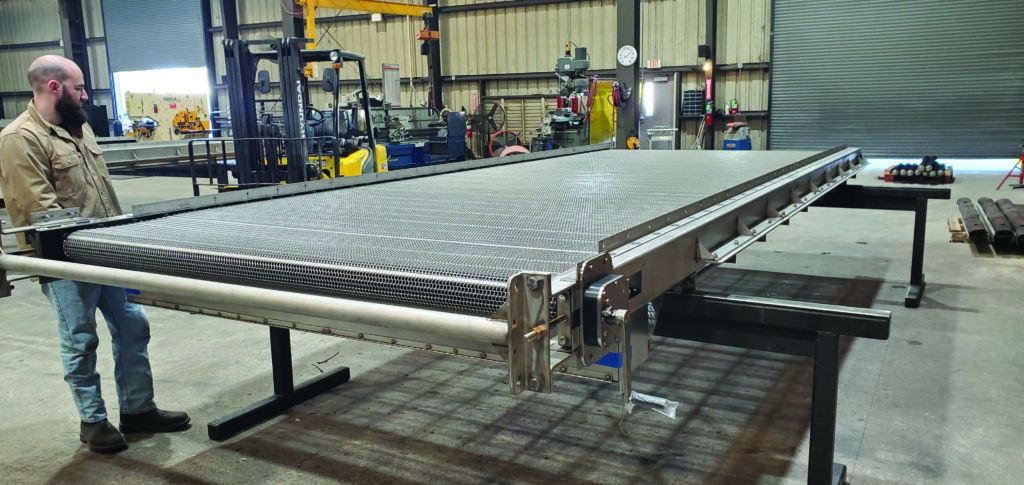
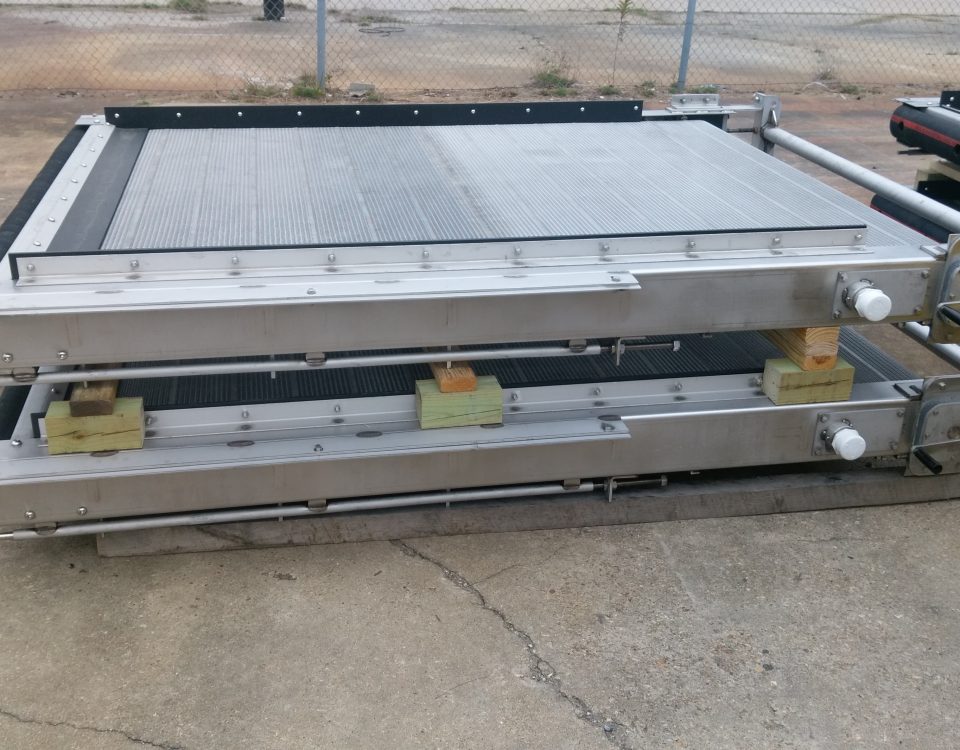
A cooling tower traveling screen that’s close to the right size isn’t the same as one built to fit. Plant teams that have dealt with a poorly fitted screen know the difference.
Gaps in the inlet seal let debris bypass filtration entirely. Frames that don’t seat correctly accelerate wear. A unit that was never quite right for its basin becomes a maintenance problem before it becomes a filtration solution.
Most of these problems trace back to fabrication. Custom-fit screens can eliminate most of these problems before they reach the plant floor.
How Does Poor Screen Fit Create Downstream Problems?
When a traveling screen isn’t sized correctly for its basin, the issues don’t stay contained to the screen itself. Debris that bypasses a gap in the inlet seal ends up in the sump, and from there, it moves downstream into heat exchangers, condensers, and pumps that weren’t designed to handle it.
The cost of a fouled exchanger goes well beyond the cleaning crew:
- Reduced heat transfer efficiency running in the background for days or weeks before anyone catches it
- Increased chemical treatment costs as system performance drifts
- Unplanned downtime when the problem finally gets attention
In a refinery or petrochemical setting, that chain of events is familiar and expensive. Custom-fabricated screens are built to eliminate that entry point.
What Makes a Custom-Fit Traveling Screen Different?
Custom sizing starts with measuring what’s actually in the field, not what a drawing says should be there. Basin dimensions get documented precisely before any fabrication begins:
· opening width and depth
· available installation clearance
· service access paths
· any site-specific constraints that affect how the screen will operate day to day
From those measurements, CTVS designs the screen frame and drive configuration to match. That can mean a significantly different unit from a stock option, with changes to frame geometry, basin wall interface, and inlet seal approach. The goal is a unit that installs without modification and seats without gaps.
Mesh selection is part of this process, too. The right opening size depends on the actual debris profile in the basin and what downstream equipment can tolerate.
A finer mesh catches more debris, but it accumulates loading faster, which affects how the screen needs to be operated. Getting that match right from the start is what determines whether the screen keeps up with the load or creates its own service demands.
How Does Cooling Tower Screen Material Selection Drive Long-Term Reliability?
Cooling tower water in a refinery or petrochemical plant is not clean water. Treatment chemicals, biological growth, and suspended solids work continuously on any component sitting in the basin. Material choices made during fabrication determine whether a screen maintains its geometry and surface integrity over years of exposure or begins to degrade in the first operating cycle.
CTVS builds its traveling sump screens from three materials selected specifically for industrial water environments:
- Stainless steel for structural components and mesh: provides corrosion resistance, dimensional stability, and longevity in chemically treated water.
- Naval brass for hardware and wear components: provides corrosion resistance paired with the machinability needed for precision fabrication.
- UHMW plastic for guides, seals, and contact surfaces: provides low friction, no corrosion, and no metal-on-metal wear that would otherwise become a recurring service issue.
These aren’t premium upgrades. They’re the material choices that determine how long a screen runs before it needs attention. In a facility where maintenance windows are scheduled around production, that matters more than the unit price difference.
What Features Can Be Customized on a Traveling Cooling Tower Screen?
Beyond frame dimensions and mesh size, CTVS builds flexibility into how each screen operates. A few things worth understanding when evaluating options:
- Operational modes: Screens can be configured for continuous movement or differential-pressure-triggered cycling, depending on what the application calls for.
- Manual or automated screen operation: Some facilities prefer manual control; others need automated systems that respond to system conditions without operator input. CTVS accommodates both.
- Basin-specific structural considerations: Older towers, unusual inlet geometry, or limited clearance for installation or service get accounted for in the design, not discovered after delivery.
The result is a screen that doesn’t require the plant team to adapt their operation around the equipment’s limitations.
Long-Term Cost Benefits of Custom Traveling Cooling Tower Screens
A traveling sump screen built to fit the basin properly costs less to install, runs longer without service issues, and does the filtration job it was specified for. What drives up the total cost of ownership isn’t usually the equipment itself. It’s the maintenance hours, the unplanned downtime, and the downstream equipment damage that follow when the screen wasn’t quite right to begin with.
Cooling Tower Valves & Screens has been fabricating traveling sump screens for industrial facilities across the Gulf Coast and beyond for more than 26 years.
If you’re evaluating a traveling screen for your cooling tower basin, it’s worth talking to a team that can fabricate a custom-fit for your facility. Reach out to CTVS to discuss options for your specific application.