
When Should You Retrofit Instead of Replacing Cooling Tower Equipment?
March 25, 2026
5 Benefits Cooling Tower Upgrades Bring to Baton Rouge Facilities
April 30, 2026
Cooling towers operate in environments where airborne debris, waterborne contaminants, and continuous airflow are unavoidable. While these conditions are expected, the impact of inadequate screening systems is often underestimated.
When debris enters a cooling tower basin, it does not remain isolated. It circulates through pumps, piping, and heat exchangers, creating system-wide performance issues that increase maintenance demands and operational risk.
For industrial facilities, poor debris management is not just a maintenance concern. It directly affects uptime, efficiency, and long-term equipment costs.
Why Does Debris Accumulate in Cooling Tower Basins?
Cooling towers continuously pull large volumes of air through the system to support heat transfer. Along with that air comes debris.
Common sources include:
• Leaves and organic material
• Dust and airborne particles
• Industrial fibers and contaminants
• Process-related debris from surrounding operations
Without effective intake screening and basin protection, this material settles in the basin and begins circulating throughout the system.
Over time, even small amounts of debris can compound into larger operational problems.
How Does Inadequate Screening Impact Cooling Tower System Performance?
When screening systems fail to properly capture and remove debris, the effects extend beyond the basin.
Restricted Water Flow: Debris buildup can obstruct flow paths, reducing circulation efficiency and limiting heat transfer performance.
Increased Pump Strain: Pumps must work harder to move water through partially blocked systems, increasing energy use and accelerating wear.
Clogged Heat Exchangers: Fine debris can pass through inadequate screens and accumulate in heat exchangers, reducing cooling capacity.
Unstable System Operation: Flow inconsistencies caused by debris can lead to uneven distribution and fluctuating system performance.
These issues often develop gradually, making them easy to overlook until performance noticeably declines.
How Does Cooling Tower Debris Increase Maintenance Costs?
The financial impact of poor debris control is rarely limited to one component.
Facilities often experience:
• More frequent basin cleanouts
• Increased labor and maintenance costs
• Premature pump and equipment wear
• Higher energy consumption due to inefficiencies
• Unplanned downtime for cleaning and repairs
As seen in cooling tower environments, debris intrusion is a major contributor to equipment degradation and reduced lifespan.
In many cases, facilities address these issues reactively, treating symptoms rather than addressing the root cause.
What Are the Signs of Cooling Tower Debris Problems?
Debris becomes a larger operational concern when it begins affecting multiple parts of the cooling system.
Warning signs include:
• Repeated clogging of strainers or exchangers
• Increased vibration or noise in pumps
• Declining cooling performance
• Rising maintenance frequency
• Visible debris accumulation in the basin
At this stage, debris is no longer a localized issue. It is impacting overall system reliability.
How Do Cooling Tower Screening Systems Prevent Debris Problems?
Effective cooling tower screening systems are designed to do more than capture debris. They provide continuous protection for the entire system.
Upgraded screening solutions can:
• Remove debris before it enters circulation
• Maintain consistent water flow
• Reduce strain on pumps and downstream equipment
• Minimize manual cleaning requirements
• Improve overall system reliability
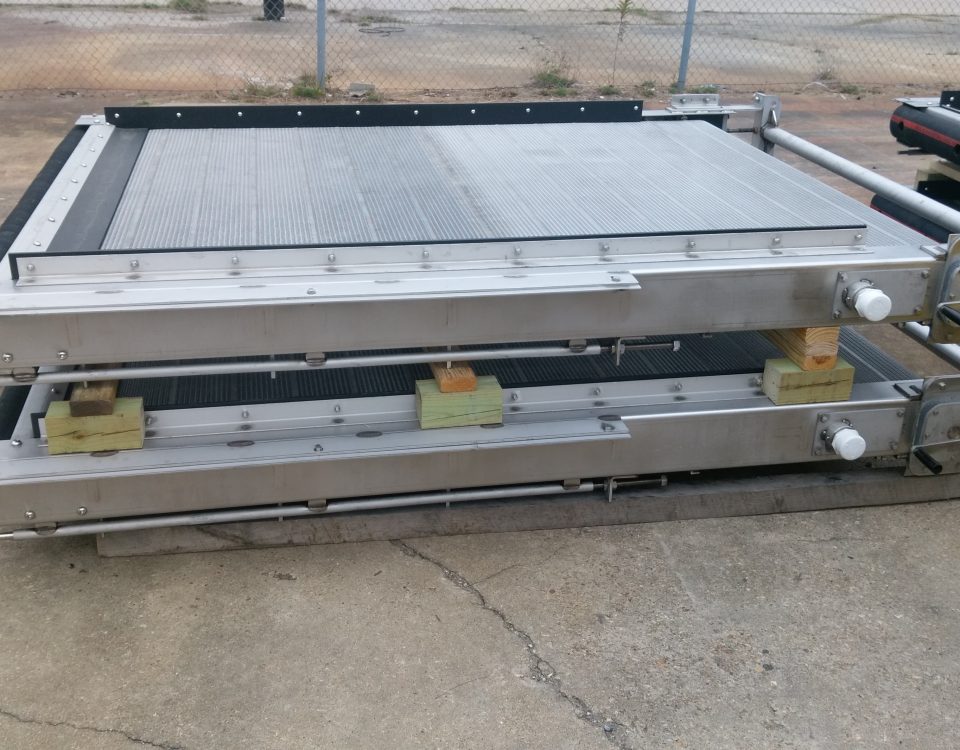
Traveling water screens, in particular, allow for continuous debris removal without interrupting operation, making them well-suited for industrial environments with high debris loads.
How Can Facilities Improve Cooling Tower Debris Management?
Improving debris control starts with evaluating current screening performance.
Facilities should consider:
• Whether existing screens effectively capture fine and large debris
• How frequently manual cleaning is required
• Whether debris is reaching pumps or exchangers
• If screening systems operate continuously or intermittently
In many cases, upgrading to engineered screening systems designed for industrial cooling tower conditions provides immediate improvements in performance and reliability.
CTVS designs cooling tower screening solutions specifically to address debris intrusion at the source. By improving basin protection and flow conditions, facilities can reduce maintenance demands, protect critical equipment, and maintain consistent cooling performance.