
How Cooling Tower Basin Conditions Affect System Reliability
June 10, 2026
How to Stop Pump Cavitation in Industrial Cooling Tower Basins Without Dropping Flow Rates
July 15, 2026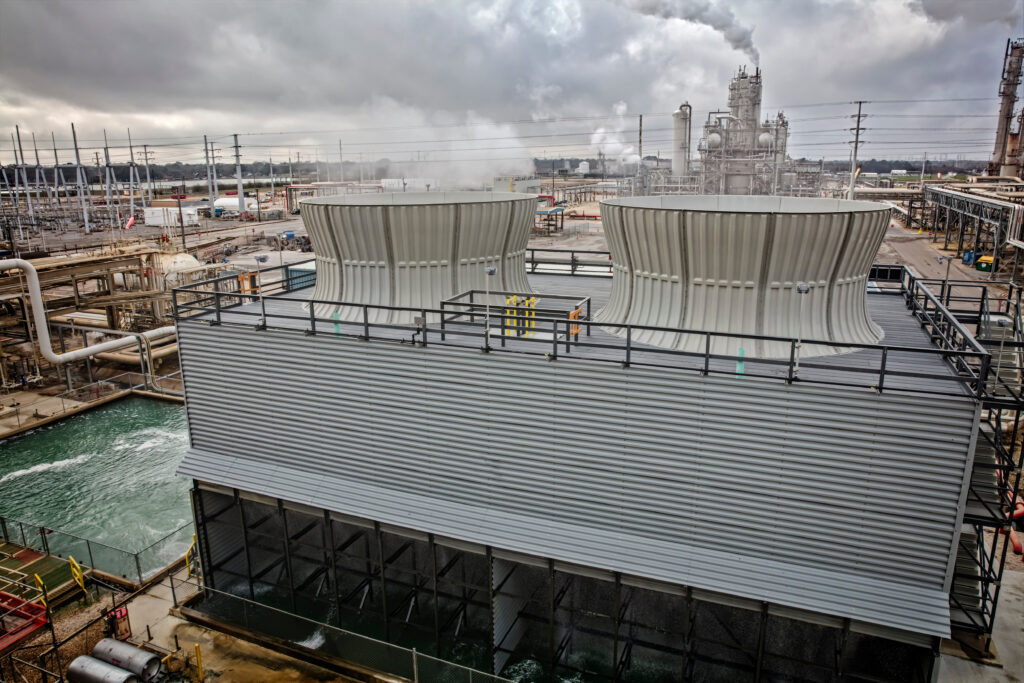
When a crossflow cooling tower begins falling behind on thermal performance, it’s easy to assume the problem lies with the process load or chiller. But in many cases, the issue starts on the distribution deck.
Uneven water distribution rarely announces itself with a major failure. Instead, it develops gradually: a few dry streaks in the fill, inconsistent basin temperatures, or heat exchangers that suddenly require more frequent cleaning. By the time the problem is obvious, the tower may have already been operating inefficiently for months.
The good news is that uneven water distribution is typically diagnosable and correctable, if you know where to look.
What Are the Signs of Uneven Water Distribution in a Cooling Tower?
In a properly functioning crossflow cooling tower, water should fall through the fill in a consistent pattern across the deck. When distribution becomes uneven, some sections of fill receive too little water while others become oversaturated.
Common warning signs include:
- Dry or partially dry areas in the fill
- Uneven basin temperatures
- Rising approach temperatures
- Hot spots in individual cells
- Increased exchanger or condenser fouling
- Valves that are difficult to adjust or no longer hold position
Because these symptoms develop gradually, they are often mistaken for normal wear or changing operating conditions.
How Do You Troubleshoot Uneven Water Distribution?
A systematic inspection helps isolate the root cause before unnecessary repairs are made. In most cases, the inspection sequence should follow this order:
- Nozzles
- Distribution pans
- Debris conditions
- Distribution valves
Nozzle Flow Restrictions Affect Water Distribution
Clogged nozzles are one of the most common causes of uneven water distribution. Biological growth, scale, sediment, and debris can restrict flow and create dry zones in the fill below.
During a planned outage, inspect nozzles for buildup, damage, or blockages. Pay particular attention to corners and low-flow areas where debris tends to accumulate.
Unlevel Distribution Pans Affect Heat Transfer
If nozzles are clear, inspect the distribution pan. Warped, cracked, or scaled pans can redirect water away from intended areas and create recurring dry zones.
A pan that is even slightly out of level may consistently misdirect water regardless of valve performance.
Debris Buildup Reduces Tower Performance
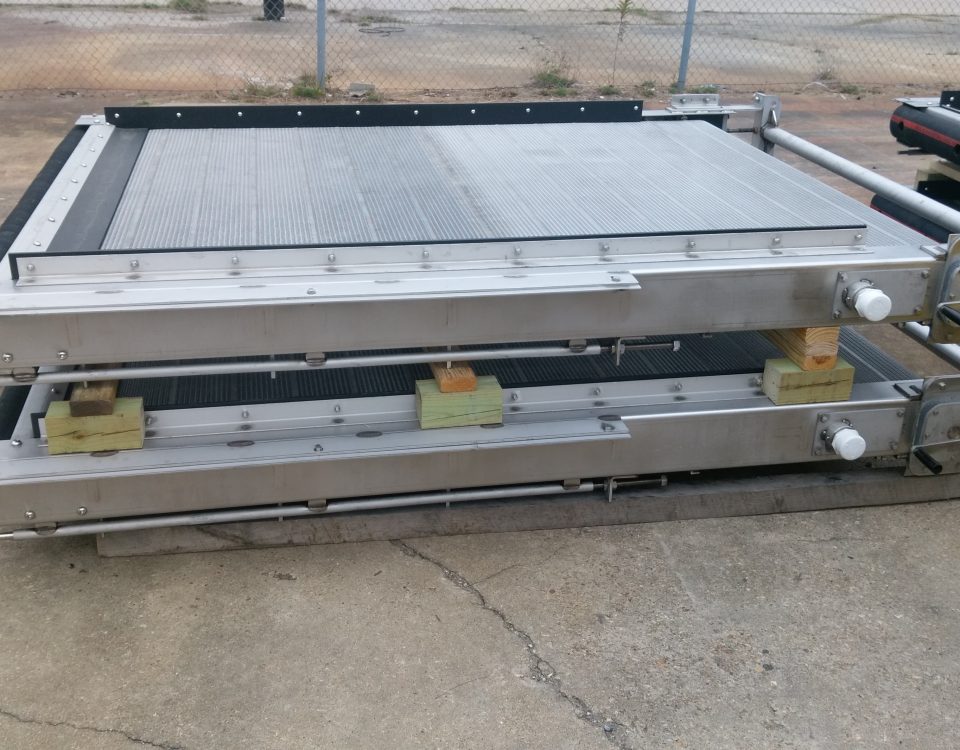
Debris buildup in the sump can contribute to ongoing distribution problems. Leaves, deteriorated fill, sediment, and biological material can circulate through the system and eventually affect downstream equipment.
This is where sump screening plays an important role. Preventing debris from reaching pump suction areas, exchangers, and condensers helps improve reliability across the entire cooling system.
How Do You Identify a Failing Distribution Valve?
Once nozzles and pans have been inspected, attention should turn to the distribution valves.
In crossflow cooling towers, distribution valves regulate water flow to each section of the deck. As valves age, corrosion and wear can make them difficult to adjust or prevent them from maintaining proper flow balance.
Signs of valve failure may include:
- Corroded or difficult-to-move stems
- Valves that won’t hold adjustment
- Persistent leakage
- Uneven flow between cells
- Loss of positive shut-off
When these issues become recurring, continued repairs may only provide temporary relief.
When Should You Consider Replacing a Distribution Valve?
Not every distribution problem requires replacement. A clogged nozzle or isolated blockage may be resolved with cleaning and routine maintenance.
However, replacement often becomes the better long-term solution when:
- Multiple valves show wear or corrosion
- Flow balance cannot be maintained
- Valves require frequent adjustment
- Downtime for repairs becomes routine
- Exchanger or condenser fouling persists
At that point, the issue is no longer just maintenance; it’s a reliability concern.
How Can Vari-Flow Valves Improve Cooling Tower Performance?
The Vari-Flow SS Series from Cooling Tower Valves & Screens is designed as a direct replacement for existing crossflow cooling tower distribution valves.
Constructed from stainless steel with UHMW-PE bushings, Vari-Flow valves are engineered to address common failure modes associated with conventional valves, including corrosion, wear, and loss of flow control.
Key features include:
- Stainless steel construction
- UHMW-PE plastic bushings
- No greasing required
- Positive shut-off capability
- Internal guide and support system
- Direct replacement design
- 10-year warranty
For facilities dealing with aging valves and recurring maintenance issues, upgrading to a purpose-built replacement can help improve reliability while reducing long-term maintenance demands.
Similarly, traveling sump screens from Cooling Tower Valves & Screens help prevent debris from reaching downstream equipment, reducing fouling and supporting overall system performance.
Can You Protect Cooling Tower Performance With Reliable Flow Control?
Uneven water distribution can quietly reduce cooling efficiency and create maintenance challenges throughout the system. Identifying and correcting the root cause early helps protect thermal performance, reduce downtime, and extend equipment life.
Whether the issue stems from clogged nozzles, debris accumulation, or aging distribution valves, addressing flow problems before they escalate can improve long-term reliability.
For facilities experiencing recurring distribution issues or persistent exchanger fouling, upgrading critical components may provide a more reliable long-term solution. Cooling Tower Valves & Screens manufactures Vari-Flow distribution valves and traveling sump screens designed to improve flow control, reduce maintenance, and help protect critical cooling tower equipment.
Contact CTVS to discuss the right solution for your crossflow cooling tower application.