
How to Troubleshoot Uneven Water Distribution in Crossflow Cooling Towers
June 18, 2026
How Improper Valve Operation Affects Cooling Tower Efficiency
July 17, 2026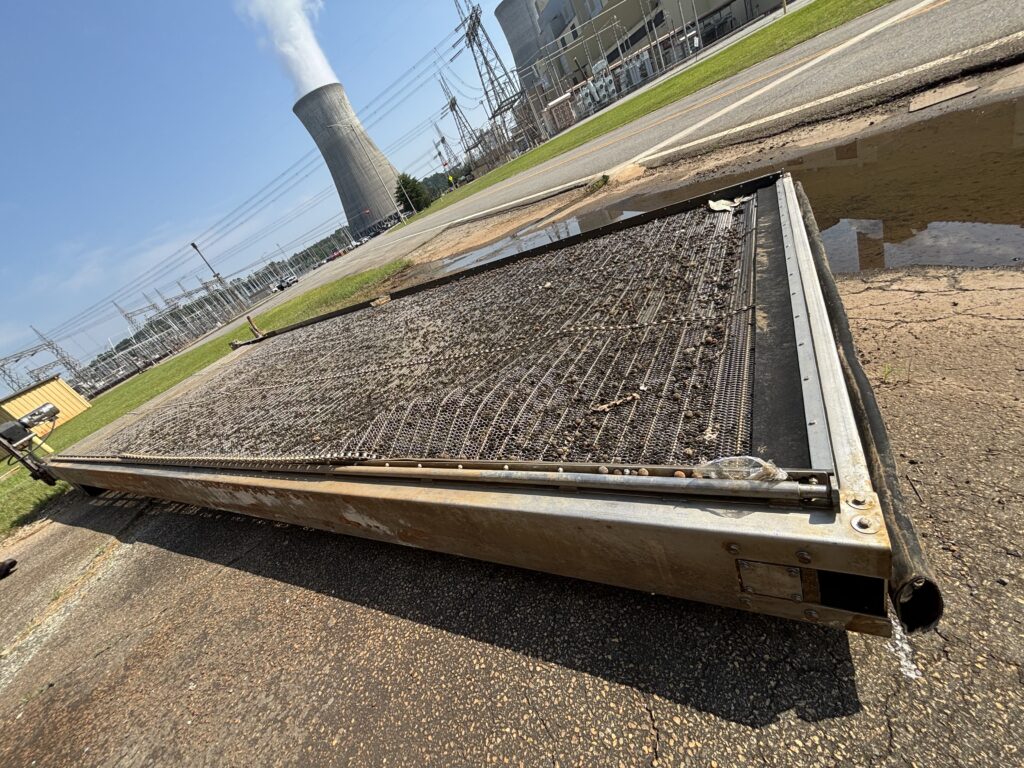
Pump cavitation is one of the most common and costly hydraulic problems affecting heavy industrial cooling tower systems in refineries and petrochemical plants.
Often, the cause of cavitation does not start with the pump itself.
In many high-capacity loops, the problem begins upstream with a clogged stationary sump screen that restricts water flow into the pump suction, creating severe hydraulic restrictions that lead directly to cavitation.
What Is Pump Cavitation and Why Is It So Destructive to Plant Operations?
Pump cavitation occurs when the pressure at the pump suction drops low enough to allow vapor bubbles to form in the liquid. As those bubbles move into higher-pressure areas inside the pump, they collapse violently against internal components.
In a continuous-process plant, this repeated implosion causes significant mechanical damage, including:
- Excessive vibration
- Loud rattling or “gravel-like” noises
- Impeller erosion
- Premature bearing failure
- Mechanical seal damage
- Reduced pump efficiency
- Increased maintenance costs
While cavitation often sounds like a mechanical failure, the underlying cause is frequently hydraulic. The pump simply isn’t receiving enough water to operate under its intended conditions.
Why Do Process Pumps Lose NPSH During Heavy Debris Events?
Every industrial pump requires an adequate supply of water at its suction inlet. Engineers refer to this as available Net Positive Suction Head (NPSH). When available NPSH falls below what the pump requires, cavitation becomes increasingly likely.
One of the most common reasons for the decrease in available NPSH is debris accumulation within the cooling tower basin.
In refining and chemical processing environments, cooling towers operate continuously, pulling in massive volumes of ambient air and debris.
High-debris events occur year-round, including:
- Seasonal pollen and cottonwood seed runs
- Leaves and regional organic debris
- High winds, storms, and Gulf Coast hurricanes
- On-site construction and sandblasting dust
- Process scale and corrosion from aging piping infrastructure
- Deteriorating tower fill media migrating down to the basin
- Biological growth and algae sheets shedding from the structure
As this material collects on a stationary sump screen, the screen’s open surface area gradually decreases. Although the pump continues attempting to move the same amount of water, less water can actually reach the suction line.
The result is reduced suction pressure, lower available NPSH, and eventually, pump cavitation.
Why Do Standard Stationary Sump Screens Become a Flow Restriction?
Stationary sump screens serve an important purpose by preventing debris from entering the downstream heat exchangers. However, in heavy industry, they possess an inherent, dangerous limitation: once debris begins accumulating, the screen itself becomes the restriction.
Unlike self-cleaning systems, traditional stationary screens rely on operators noticing pressure changes or visual signs of clogging before manually cleaning the screen. During a severe debris storm or high-wind event near a chemical plant, this restriction can develop in a matter of minutes.
As debris accumulates on a stationary screen:
- The open screen surface area decreases.
- Water velocity through the remaining open spaces accelerates.
- Differential pressure across the screen rises sharply.
- The pump suction becomes increasingly starved.
The screen is technically doing its job by capturing debris, but because it cannot clear itself, it forces a trade-off between water cleanliness and pump survival.
Why Doesn’t Reducing Pump Flow Actually Fix Cavitation?
When cavitation rattles a pump deck, operations teams often attempt to mitigate the immediate danger by:
- Lowering pump speed with a variable frequency drive (VFD)
- Throttling discharge valves
- Taking pumps offline
- Accepting reduced system flow
While these actions may temporarily lessen cavitation, they don’t eliminate the underlying restriction.
The clogged sump screen remains in place, continuing to limit water reaching the pump suction.
In a 24/7 refinery or petrochemical facility, reducing cooling water flow rates may help protect the pump in the short term, but it often comes at a cost:
- Reduced cooling water flow directly degrades heat rejection efficiency
- Process approach temperatures increase, limiting production throughput
- Continued issues can cause premature equipment breakdown, possibly leading to costly downtime
Instead of restoring proper hydraulic equilibrium, throttling flow simply forces the process plant to compensate for a problem that belongs in the basin.
What Does Rising Differential Pressure Tell You About Your Cooling Tower?
Many control rooms closely monitor differential pressure across the intake but view it strictly as a screen-cleaning metric rather than a pump-preservation metric.
In reality, increasing differential pressure across a sump screen is often an early indicator that debris is restricting flow.
As differential pressure rises, it can signal:
- A reduction in available screen surface area
- Increased resistance to water entering the pump
- Lower available NPSH
Rather than viewing differential pressure solely as a maintenance metric, facilities should consider it an early warning sign of developing suction restrictions.
Addressing the restriction before cavitation begins can help prevent unnecessary equipment damage and unplanned plant turnarounds.
How Does a Traveling Sump Screen Prevent Pump Starvation?
Unlike stationary screens, a traveling sump screen continuously removes debris while the cooling tower remains fully operational.
Instead of allowing debris to accumulate until an operator is dispatched to clean it, the screen automatically rotates through the basin floor, capturing debris and clearing itself dynamically as it cycles.
This continuous cleaning process helps maintain a consistent open screen area, allowing water to flow freely to the pump suction.
By preventing debris from creating a significant restriction, traveling sump screens help maintain:
- Stable suction pressure
- Higher available NPSH
- Consistent cooling water flow
- Reduced risk of pump cavitation
- More reliable cooling tower operation
Rather than reacting to clogged screens after performance begins to decline, facilities can maintain steady hydraulic conditions throughout changing seasonal debris loads.
How Do Traveling Sump Screens Compare to Stationary Screens?
While both screen types are designed to keep debris out of the cooling water system, they manage debris very differently.
| Stationary Sump Screen | Traveling Sump Screen |
| Debris accumulates on the screen | Debris is removed continuously |
| Open screen area decreases over time | Open screen area remains consistent |
| Differential pressure gradually rises | Differential pressure stays more stable |
| Increased risk of pump starvation | Maintains consistent pump suction |
| Requires manual cleaning | Automated cleaning during operation |
| Reactive maintenance approach | Preventive debris management |
For facilities that regularly experience seasonal debris loading, continuous debris removal can significantly reduce the hydraulic restrictions that contribute to cavitation.
How Can You Tell If Your Basin Screen Is Causing Pump Cavitation?
Pump problems aren’t always mechanical failures. If your refining or chemical facility experiences any of the following symptoms, your basin screening system is likely contributing to the issue:
- Pump vibration increases after storms or high winds
- Cavitation appears during pollen or leaf season
- Differential pressure steadily rises between cleanings
- Mechanical seals or bearings require frequent replacement
- Cooling performance declines unexpectedly
- Pumps become noticeably louder over time
- Basin water levels fluctuate
- Operators are cleaning sump screens more frequently
When several of these symptoms occur together, it may be worth evaluating whether the pump is being starved by a restricted sump screen rather than assuming the pump itself is failing.
Could Your Basin Screen Be the Real Cause of Pump Damage?
Pump cavitation is routinely treated as a mechanical issue, but across heavy industry, the root cause frequently traces back to the basin floor. Before scheduling your next costly pump teardown or impeller replacement, it is vital to evaluate whether your screening setup can actually handle your environmental debris load.
For more than 26 years, Cooling Tower Valves & Screens (CTVS) has helped Gulf Coast refineries, chemical plants, and heavy industrial facilities solve exactly these types of high-stakes hydraulic restrictions. Our heavy-duty Vari-Flow Traveling Sump Screens are custom-engineered to drop directly into your existing basin footprint, eliminating bypass risks and ensuring continuous debris removal without sacrificing process flow rates.
If your screening infrastructure hasn’t been evaluated against your current flow demands, let CTVS run a technical review to determine whether your basin setup is actively protecting your pumps or quietly forcing your plant into costly downtime.