
Cooling Tower Upgrades: When Should Industrial Facilities Replace Aging Equipment?
February 23, 2026
When Should You Retrofit Instead of Replacing Cooling Tower Equipment?
March 25, 2026
Cooling towers are designed to operate in some of the most demanding environments in industrial facilities. In theory, many cooling tower components should last decades. In reality, plant managers and maintenance teams often find themselves replacing valves, screens, piping, and structural components far sooner than anticipated.
Premature equipment aging can lead to increased maintenance costs, unexpected downtime, and reduced cooling efficiency. Understanding why cooling tower equipment deteriorates faster than expected helps facilities make better decisions about maintenance strategies, upgrades, and replacement schedules.
Why Do Cooling Tower Environments Cause Rapid Equipment Wear?
Cooling towers operate in conditions that are inherently harsh for mechanical equipment.
Most cooling tower systems continuously circulate large volumes of warm water while exposing components to constant moisture, air movement, and fluctuating temperatures. These conditions create an ideal environment for corrosion, scale buildup, and material fatigue.
In addition to these environmental factors, cooling tower equipment is often exposed to airborne contaminants, biological growth, and chemical treatments used for water management. Over time, these elements work together to degrade metal surfaces, seals, coatings, and structural components.
Because cooling towers run continuously in many industrial facilities, even small stresses compound over thousands of operating hours each year.
How Does Corrosion Accelerate Equipment Aging?
Corrosion is one of the leading causes of premature failure of cooling tower equipment.
Cooling tower water frequently contains dissolved minerals, oxygen, and treatment chemicals. These elements can attack metal surfaces, gradually weakening components such as valves, structural supports, piping, and screens.
Industrial environments can accelerate this process even further. Facilities located near chemical plants, refineries, or coastal environments may expose cooling tower systems to additional airborne corrosive compounds.
Over time, corrosion reduces structural integrity, increases the risk of leaks, and can cause components to fail long before their expected service life.
How Do Debris and Waterborne Contaminants Damage Cooling Tower Systems?
Cooling towers continuously draw large volumes of air through the system to facilitate heat transfer. Along with air, cooling towers also draw in debris such as leaves, dust, fibers, and airborne particles.
Without proper screening and filtration, this debris enters the cooling system and circulates through pumps, piping, and heat exchangers.
Debris accumulation can:
- Restrict water flow
- Increase pump strain
- Accelerate mechanical wear
- Cause blockages within piping and equipment
Over time, these conditions place additional stress on system components, shortening their operational lifespan.
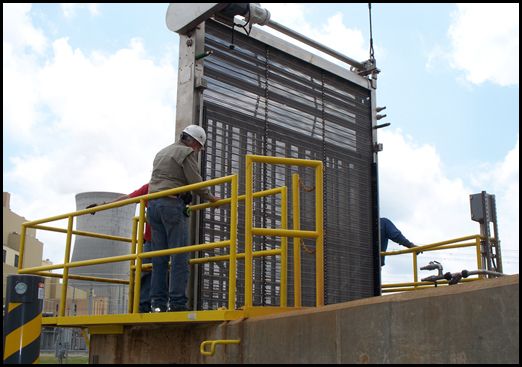
Proper intake screening and debris management systems play a critical role in protecting cooling tower infrastructure from these issues.
How Do Temperature Fluctuations Contribute to Equipment Fatigue?
Cooling towers frequently experience temperature variations as water moves between hot industrial processes and cooler ambient air.
These repeated temperature cycles cause materials to expand and contract. While these changes may be small during each cycle, the cumulative effect over months and years can cause fatigue in metal components, seals, and joints.
Thermal stress is particularly common in:
- Valve assemblies
- Structural supports
- Piping connections
- Mechanical fittings
Over time, this fatigue can lead to cracks, leaks, and structural weaknesses that require repair or replacement.
How Does Biological Growth Affect Cooling Tower Equipment?
Cooling tower systems create ideal conditions for biological growth.
Warm water, oxygen, sunlight, and nutrients allow algae, bacteria, and other microorganisms to thrive within the system. If not properly managed, biological growth can form biofilms on internal surfaces.
These biofilms can:
- Restrict water flow
- Reduce heat transfer efficiency
- Accelerate corrosion under deposits
- Increase maintenance requirements
Even when water treatment programs are in place, biological growth can still contribute to long-term equipment degradation.
Why Do Maintenance Gaps Lead to Premature Equipment Replacement?
Even well-designed cooling tower systems require consistent inspection and maintenance to achieve their full service life.
Over time, small issues such as minor corrosion, debris buildup, or early component wear can develop into larger problems if they go unnoticed.
Regular inspections help identify these early warning signs before they lead to costly equipment failures. Facilities that implement proactive maintenance programs often extend the lifespan of cooling tower infrastructure and avoid unexpected downtime.
In contrast, reactive maintenance approaches often lead to more frequent replacements and higher long-term costs.
How Do Engineered Valves and Screens Help Extend the Life of Cooling Tower Equipment?
Because debris infiltration and water flow control are two major contributors to equipment wear, many facilities focus on improving these areas when upgrading cooling tower systems.
Advanced screening systems help prevent debris from entering pumps, piping, and heat exchangers. Properly engineered valves help regulate flow and reduce stress on system components.
For example, Vari-Flow valves and cooling tower screens designedby CTVS are built specifically for the demanding conditions found in industrial cooling tower environments. These systems are engineered to improve flow control, reduce debris intrusion, and withstand the corrosive and high-volume operating conditions common in refineries, petrochemical facilities, and heavy industrial plants.
When properly designed and installed, upgraded valves and screening systems can significantly reduce wear on downstream equipment and help extend the lifespan of the entire cooling tower system.
Cooling Tower Valve and Screens, LLC supports industrial facilities with efficiency upgrades that improve performance, reduce downtime, and extend equipment life. Facilities aiming to boost reliability or plan future upgrades can explore our retrofit and replacement solutions to modernize their cooling tower infrastructure. Partner with us to keep your systems running stronger, longer.